
Operating Specifications
The ion beam source can operate between 1–95 keV. At beam energies at or below 30 keV, the shielding requirements are greatly simplified. The Alpha-E operates below that voltage.
Certain nuclear fusion reactions, however, such as p-¹¹B that have a much smaller cross section than reactions like D-D and D-T in this energy regime. Such reactions effectively require a higher beam energy to accumulate enough detection events to generate high-quality data in a reasonable acquisition time. For these higher beam energies, additional shielding is needed to protect the user from x-rays produced.
Key Parameters
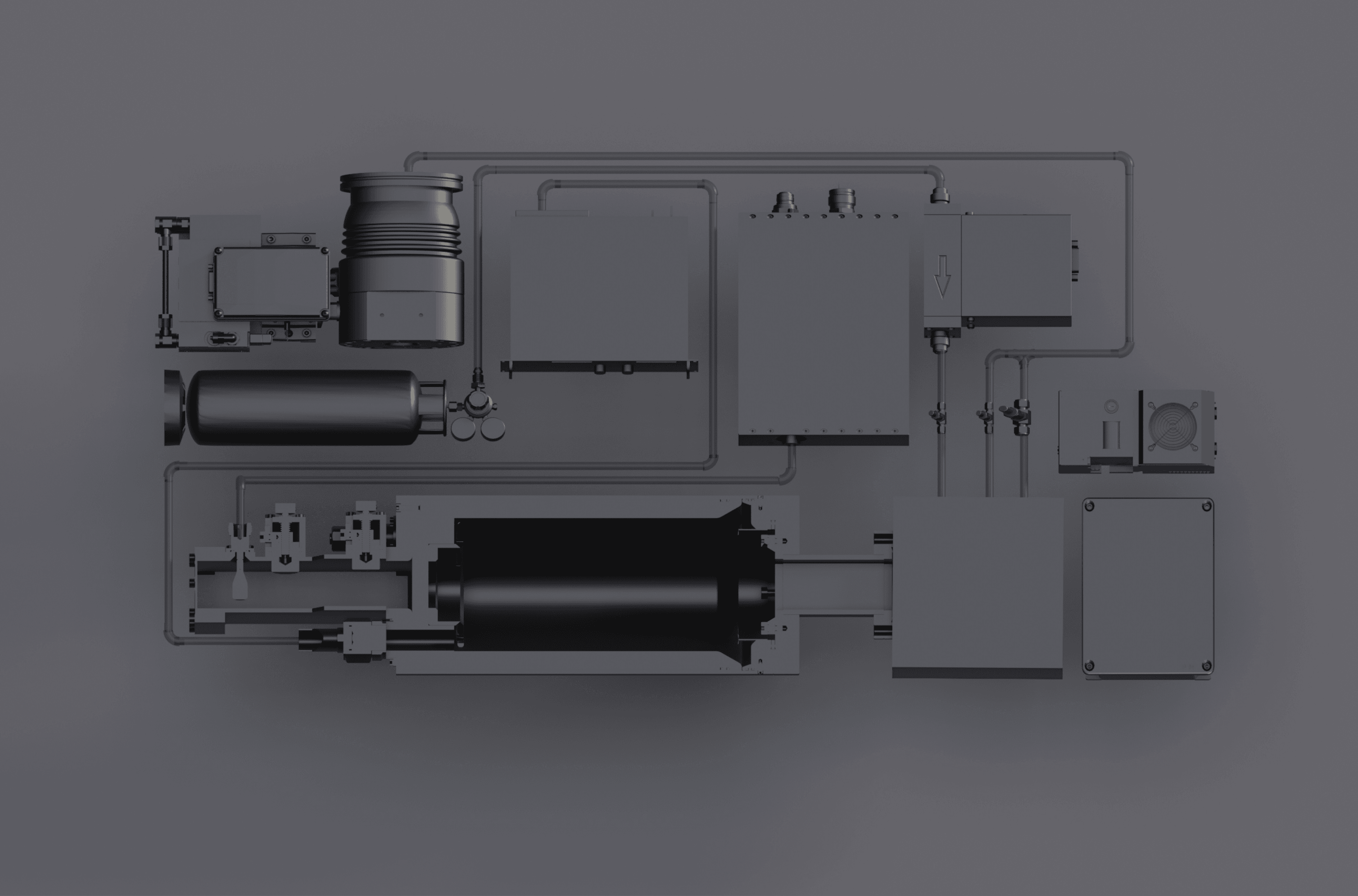
Components of the Alpha-E
Compact Particle Accelerator
Ion Beam Source
The ion source is the heart of the Alpha-E accelerator system. The main housing of the ion source encloses the plasma-forming cavity and ion optics used to form the ion beam. On one end is the microwave coupling assembly for electron cyclotron resonance (ECR) excitation and input ports for the acceleration voltage and the cooling fluid. On the other end the beam output flange connects to the modular target assembly.
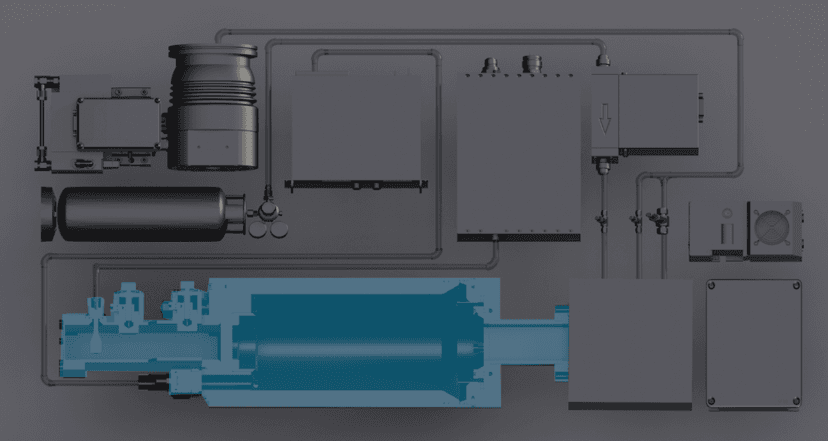
Modular Target Assembly
The user can define variable test conditions through simple modifications of the target chamber. The assembly that typically houses the fusion target is constructed with standard CF type flanges, matching the output port of the ion source. The user can, therefore, set up many different configurations of targets, detectors, and electrodes.
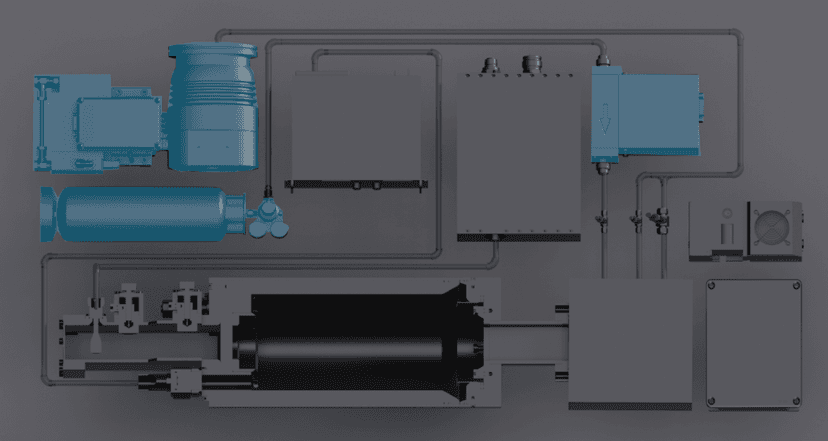
Vacuum Pumps & Pressure Control
The Alpha-E system is designed to operate with hydrogen or deuterium as the neutral gas for plasma ionization. Gas flow is regulated using a mass flow controller (MFC). A turbomolecular pump system is needed for operation of the ion beam. In typical operation, the input gas flow is balanced against the continual vacuum pump operation to establish and maintain the pressure needed to form the plasma in the ion beam source.
Microwave Source
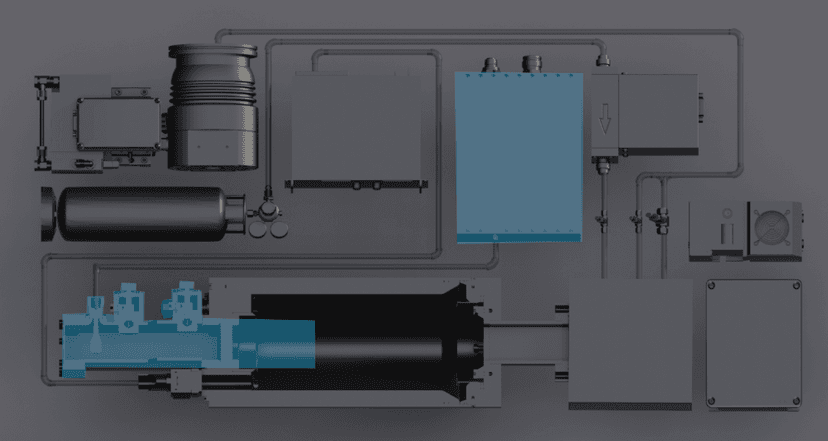
Microwave power ionizes the supplied gas by electron cyclotron resonance (ECR). The unit includes a solid-state oscillator and a series of amplifiers and signal conditioning hardware. The amplifier gain is kept fixed, and the user can vary the output power by adjusting an attenuator using the provided software. For typical operation, the 2.45-GHz microwave source is pulsed at a rate of 100–1000 Hz at a 5–10% duty cycle.
High-Voltage Power Supply
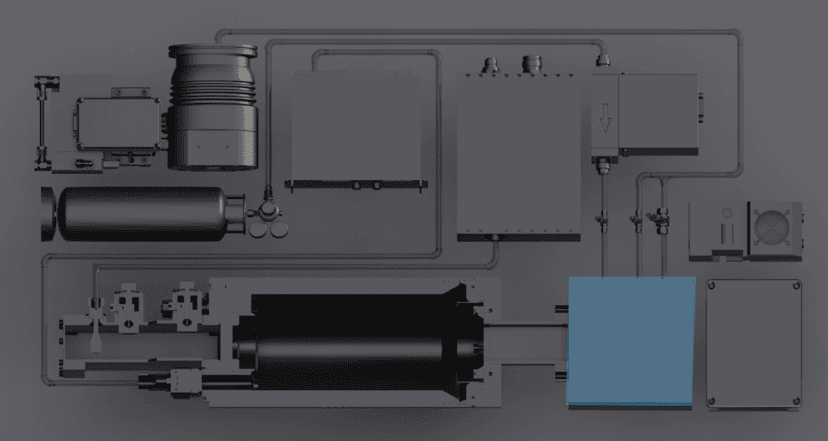
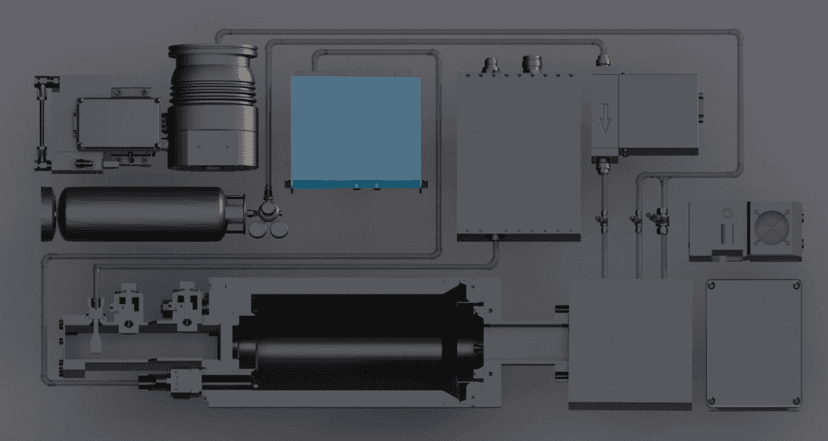
The acceleration voltage is provided by a high-voltage power supply (HVPS). The HVPS units included in the Alpha-E accelerator generate up to 30 kV using flyback transformers. Higher acceleration potentials require an external power supply and additional shielding.
Detection Systems
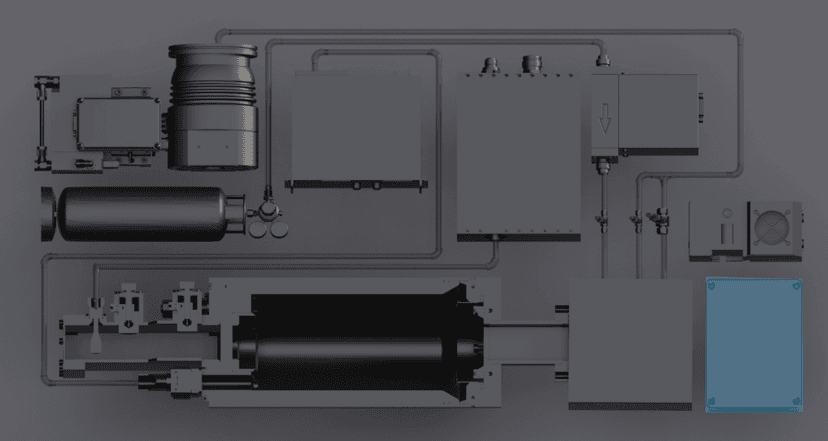
A suite of detectors and measurement systems yield data related to those in more complex plasma and fusion systems. The standard configuration of the Alpha-E accelerator includes two particle detectors and sensors for measurement of gas pressure, temperatures, and other operating conditions. Additionally, the modular system can accommodate a large number of both commercially available and custom designed detection systems.
Solid Target in Ion Beam Path
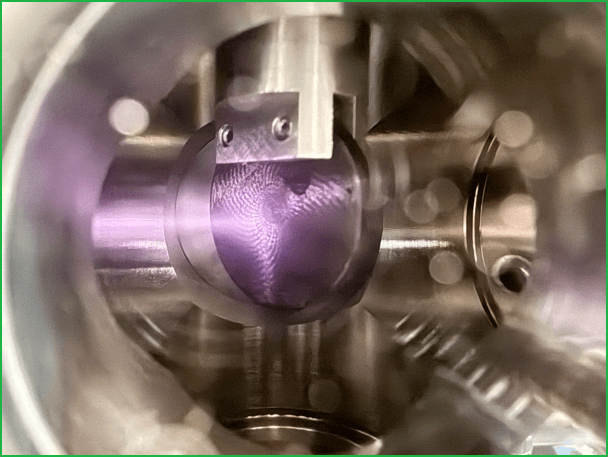
In the simplest configuration, a solid target is mounted in the path of the ion beam. The composition of the target depends on the experimental needs. If the experiment requires a beam, but not necessarily nuclear fusion, the target can be replaced with a Faraday cup or other sensor to measure the beam characteristics. The user could also install ion optics to extend or manipulate the beam.
Particle Detection Systems
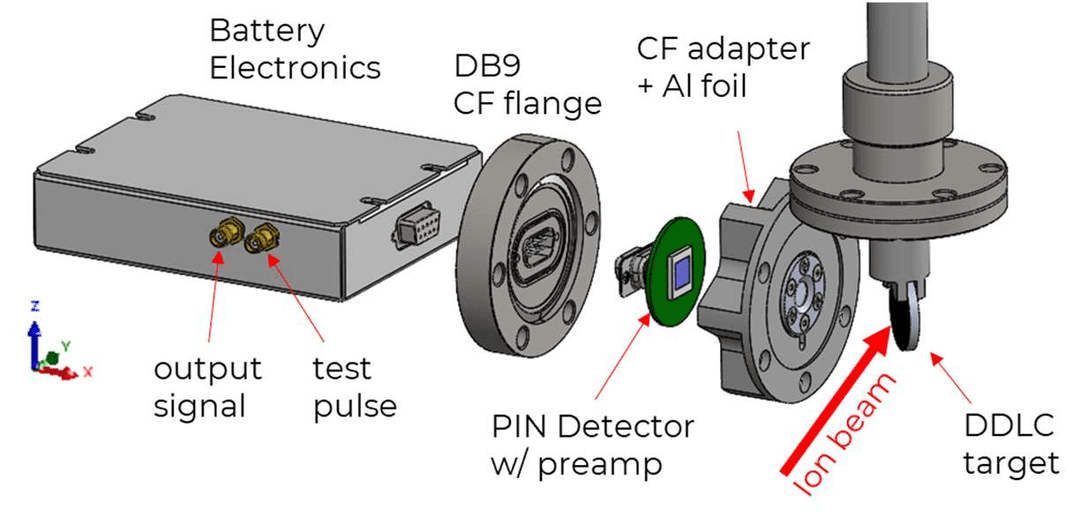
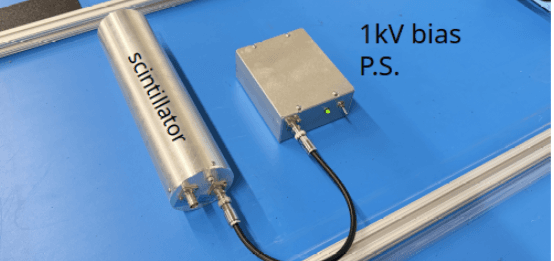
The standard configuration of the Alpha-E accelerator includes two particle detectors. A semiconductor sensor measures energetic charged particles and a scintillator device detects fast neutrons. Additionally, the modular system can accommodate a large number of both commercially available and custom designed detection systems. The following detection systems are available from Alpha Ring as a part of the Alpha-E platform. These all are compatible with the Alpha-E system, and include firmware and software to facilitate use in other measurement environments.
Detection and measurement of energetic (~MeV) particles are essential activities when working with nuclear systems such as fusion and fission, but also for industries such as material testing, medical diagnosis and treatment, border security, and health and safety.
Semiconductor Sensors
Si-PIN diode detectors are sensitive to energetic charged particles.
Scintillator-Based Detectors
Fast neutron detectors for measuring 2.45 MeV neutrons from D-D fusion.
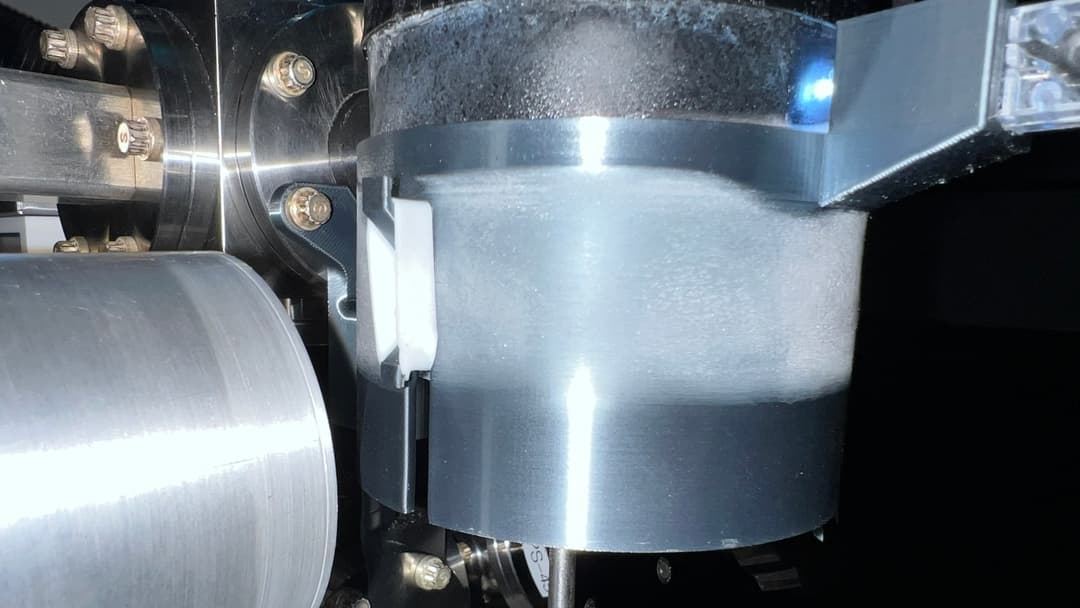
Cloud Chambers
Visualize energetic charged particles with your own eyes.
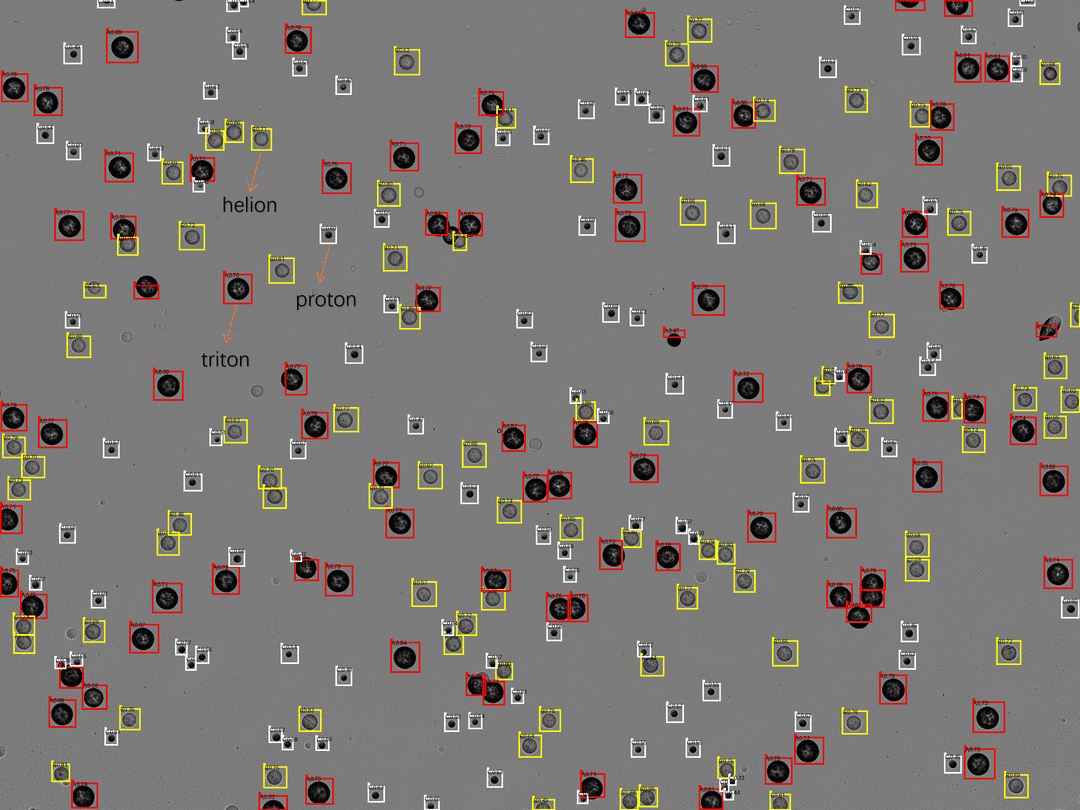
Solid-State Nuclear Track Detectors
CR-39 polymer track detectors with machine-learning analysis.
All of the detector families needed for a Tokamak or other complex plasma system can be implemented in the Alpha-E platform for applications such as training, or calibration.
Modular Accessories
Many components of the Alpha-E system can be used in other configurations as part of a modular research or teaching platform. Please contact us at alpha-e@alpharing.com for more information on hardware and software integration options.
Regulatory & Compliance
Declaration of Conformity
This device complies with
- FCC Rules for Industrial, Scientific, and Medical (ISM) Equipment (47 CFR Part 18)
- Electromagnetic Compatibility (EMC) Directive 2014/30/EU (EN 55011 CISPR 11)
Ongoing testing indicates at least partial compliance with low voltage safety regulations (IEC 61010-1:2010/A1:2019/AC:2019-04)
Registered with the US FDA (accession no. 2580002-000).
Operating Conditions
- This device may not cause harmful interference.
- This device is not intended for use in residential settings.
- This device must accept any interference received, including interference that may cause undesired operation.