
Compact Accelerator for Nuclear Fusion
The Alpha-E particle accelerator is a flexible tool with an extensible modular target assembly. The system has been designed to provide optimal reference measurements of fusion products with minimal exposure of the user to ionizing radiation.
It can be used to create reference data for energetic products from a number of different nuclear fusion reactions, including deuterium-deuterium (D-D) and proton-boron (p-B) fusion.
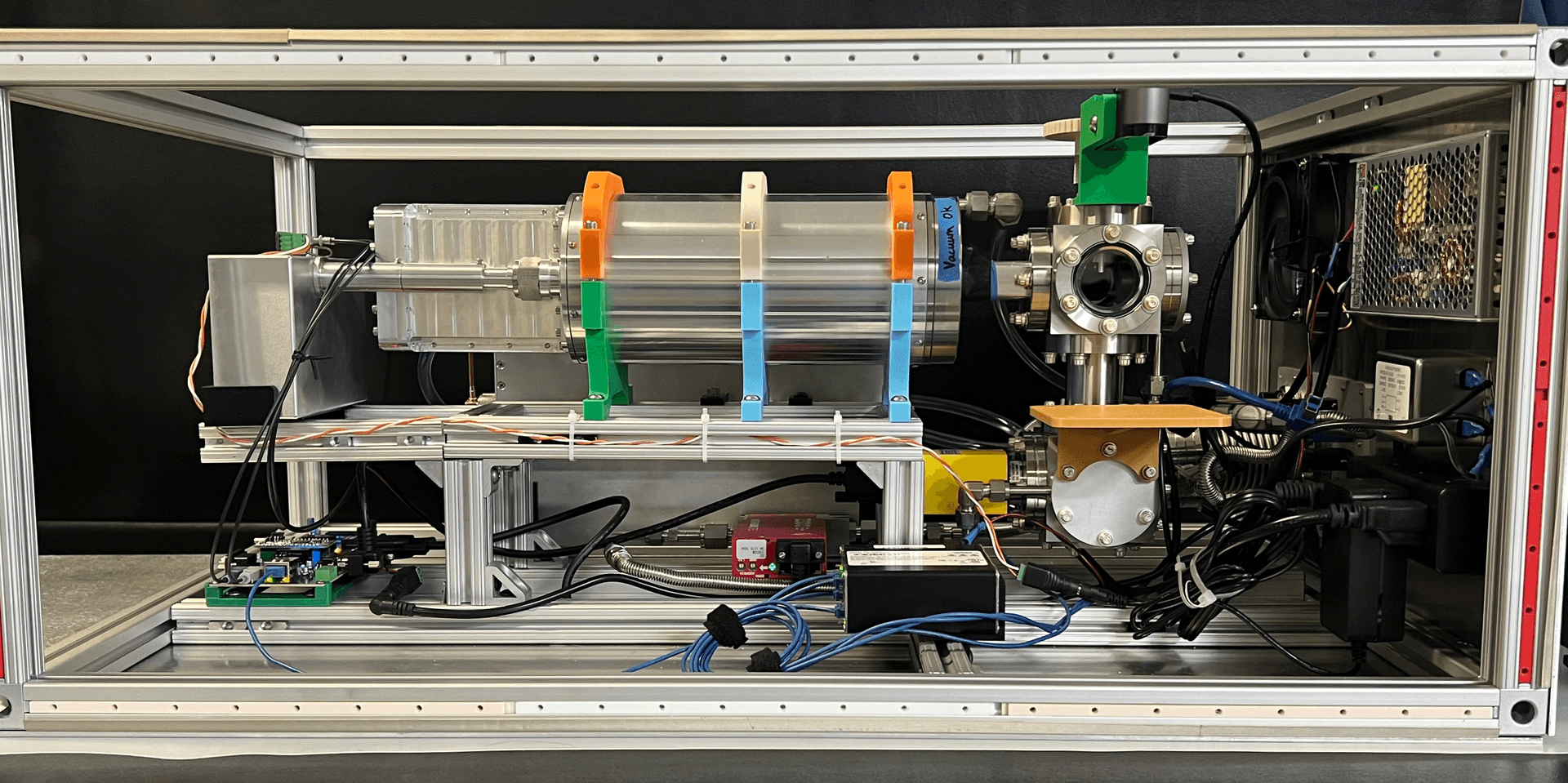
The Alpha-E model consists of two enclosures that together contain all the hardware component systems required for operation. A computer with an Ethernet port and the Alpha-E software installed is used to control the device systems.
- Primary Enclosure: Contains the ion beam source, high-voltage power supply, RF source, mass flow controller, and electronic control systems. Dimensions: 80 × 60 × 90 cm, mass ~50 kg.
- Accessories: The vacuum pumps, gas cylinder, and chiller, can be mounted externally in a variety of configurations.
- Complete system mass: ~90 kg (including all subsystems and accessories, excluding table or rack and compressed gas tank).
The system requires only standard mains power (rated for 110/220 VAC, 60/50 Hz).
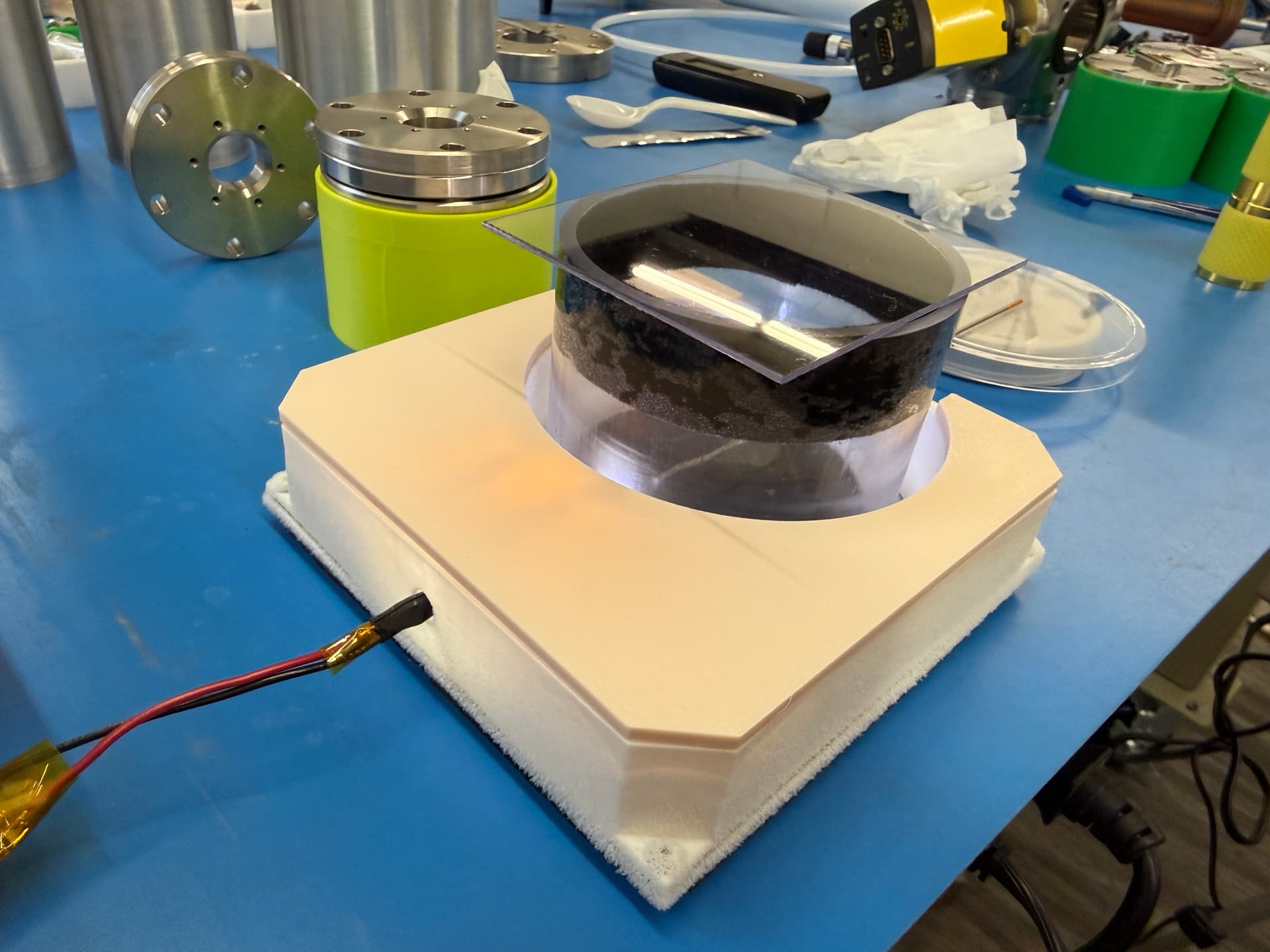
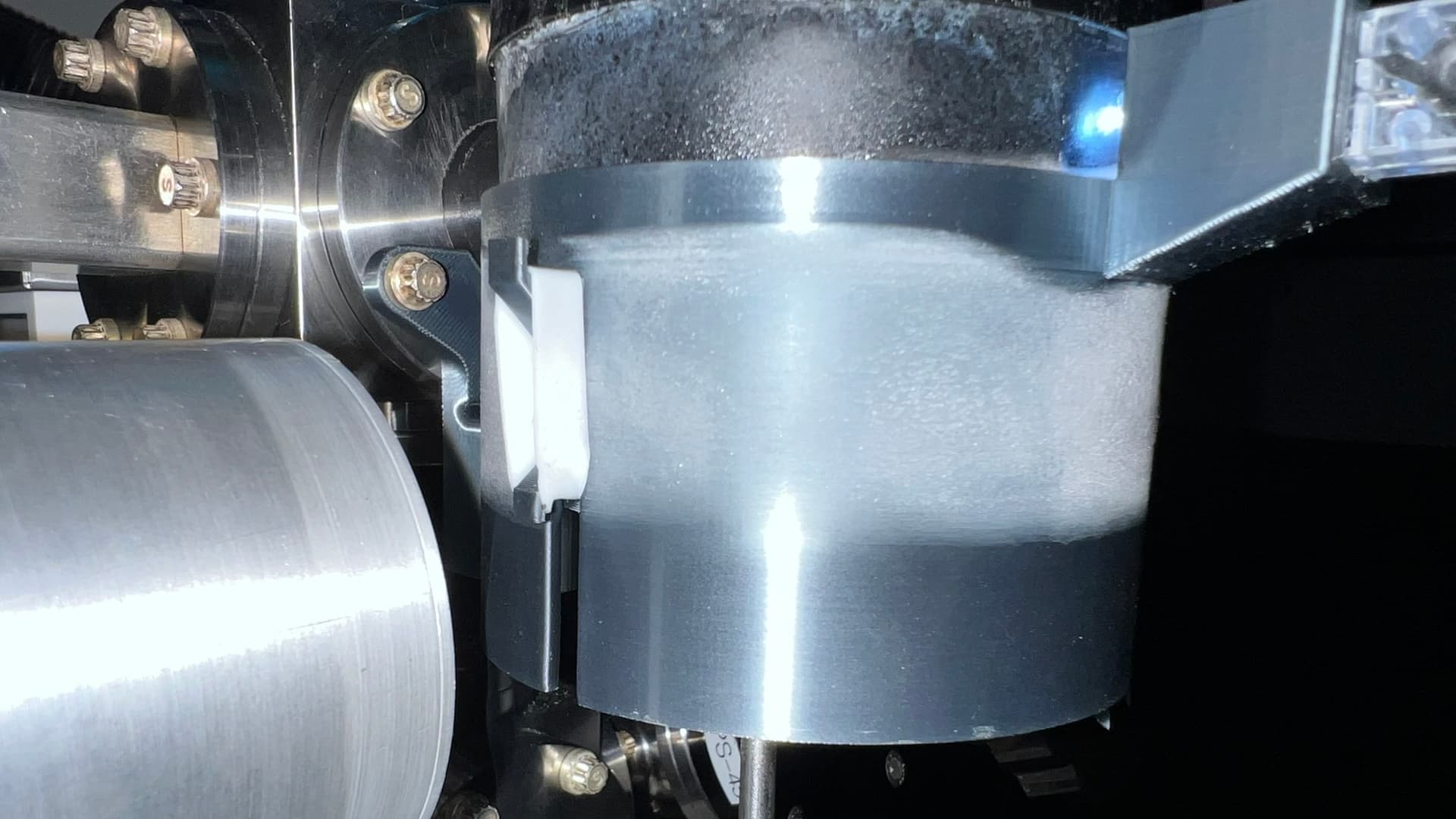
Cloud Chamber
Visualize energetic charged particles in a cloud chamber.
The cloud chamber unit can be used as a detector for the Alpha-E accelerator, or as a separate unit with a radioactive source.
Plasma Chamber
Get access to an ECR plasma without the high-voltage.
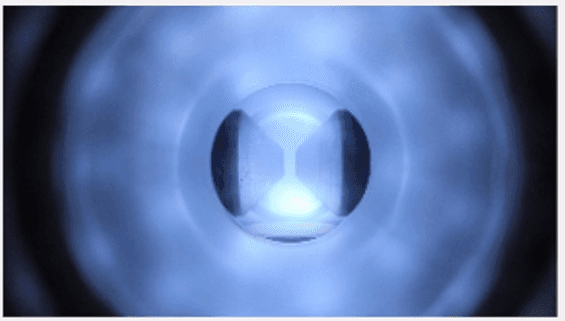
Using the same MW source, pumps, and other hardware that are part of the accelerator unit, the plasma chamber produces a similar ECR plasma as the one that is used to produce the ion beam. Without the HV bias, however, the plasma chamber can be made accessible to an array of plasma diagnostics, such as spectrometers and Langmuir probes.
With this system, the user can take measurements related to plasma characteristics and microwave propagation. Since there is no high-voltage acceleration, no fusion products are produced.
HVPS Development Kit
Explore high-voltage power supply design with hands-on hardware.
The Alpha-E HVPS uses a flyback transformer topology with an 8-stage Cockcroft-Walton (CW) multiplier to generate the ion acceleration voltage. The kit includes the flyback transformer assembly, high-voltage probes for safe measurement, and enclosures compatible with the Alpha-E system. All connections use standard interfaces, and the specifications are provided to allow integration with other devices or external HVPS units. The Alpha Ring software includes drivers for the Spellman SL 100P300 power supply for users who prefer an external high-voltage source.
Driver Topology
Flyback
CW-Multiplier Stages
8
Max Operating Voltage
30 kV
Max Operating Current
~150 µA
Input Voltage
12–36 VDC
Communication
Fiber Optics
RF Source
Drive ECR plasma generation with a configurable 2.45 GHz microwave source.
The RF/MW source supplies the excitation power for the electron cyclotron resonance (ECR) plasma in the ion source. The source consists of a solid-state oscillator followed by a series of amplifiers and signal conditioning hardware. The amplifier gain is fixed; output power is adjusted by the user via a software-controlled attenuator. For typical operation, the RF/MW source is pulsed at 100–1000 Hz at a 5–10% duty cycle.
The Advanced RF Kit expands the Alpha-E platform for measurement of performance values in the radio and microwave frequency range. It provides tools for experiments involving the ion source plasma as well as experiments related to fundamental operating parameters and the underlying physics of microwave power coupling.
Frequency
2.45 GHz
Peak Output Power
500 W
Output Impedance
50 Ω (Type-N)
Front-Panel Input
50 Ω SMA
Communication
RS-232 / USB-C / RJ-45
Cooling
Series-cooled
Detector Systems
Si-PIN Detector
Measure energetic charged particles from fusion reactions with a solid-state silicon detector. The target assembly is extensible, and standard CF-2.75 vacuum flanges accommodate a wide variety of detector configurations. Digital signal processing tools, included in the Alpha-E software package, are fully configurable to accommodate diverse experimental requirements.
Fast Neutron Detector
Detect and quantify fast neutrons — a primary fusion product — with a scintillation-based detector. The detector unit consists of a scintillator material coupled to a photomultiplier tube (PMT) and associated amplifier electronics. The signal processing chain is fully configurable through the Alpha-E software.